Power of 10

“I finished Tom Piketty’s Capital in the 21st Century!”, my friend giddily exclaimed as if she had just crossed the finishing line of grueling triathlon. Indeed that is probably an apt metaphor. In a couple days, she had finished reading the 696-page behemoth during her 10-minute commute to and from work. Her 10-minute claim was likely a gross underestimate of her commute from Balboa Park to FiDi but I got the point: a few minutes of reading here and there adds up.

Screenshot 2014-11-09 00.17.05

I used to be a reader. I used to curl under my covers, hovering a flashlight over my John Grisham suspense novels (… I know, not great literature). I used to have my head in the books so much so that it probably didn’t do much good for my -10.0 eyesight already before puberty. Back then, I always made a way to sneak in a few pages even after my mother turned off the lights goodnight — and even after scare tactics warning me that I would go blind (I am still scared of that one).

But, as an adult, I seemed to always have some excuse when it came to reading books: “I am too busy”, “I don’t have time”, “I can’t carry heavy books around”. But really, were these valid reasons? I wasn’t too busy and I didn’t NOT have time for a few minutes of reading. I had 30 minutes during my lunch breaks and easily 4x that in the evenings before hitting the sack (where my usual nightcap would be at least 2 episodes of Sherlock, Elementary, or Person of Interest). And, as for heavy books weighing me down? I didn’t have to carry bulky books around. That’s what my $99/month unlimited AT&T plan + iPhone was for!

I decided to take on this “10-minutes a day” habit. Well, it wouldn’t quite be a habit yet but I decided to incorporate it into my everyday routine so much so that it would become almost a second-nature habit: just like my nightly rituals of brushing my teeth, washing my face, and lathering on my please-keep-me-looking-16-minus-the-pimples cream. I strategically coupled my reading time with my lunch time. It was a chunk of time that I took every day, that I knew lasted a minimum of 10 minutes, and that I wouldn’t be distracted by anything much other than eating.

So what happened?

Well, I didn’t stick to at least 10-minutes of reading a day but on average it came out to several minutes of reading a day: 5 minutes on the bad days and 1+hours on the good days. The exact number of minutes didn’t really matter though. And, really neither did reading every single day. It was more that reading became an enjoyment again. I re-discovered a pleasure, a past-time renewed. Most surprisingly though and more importantly, it became a catalyst for change and a source of inspiration.

Over the two months, I finished three books.

  • Brene Brown’s The Gift of Imperfection: Let Go of Who You Think You’re Supposed to Be and Embrace Who You Are
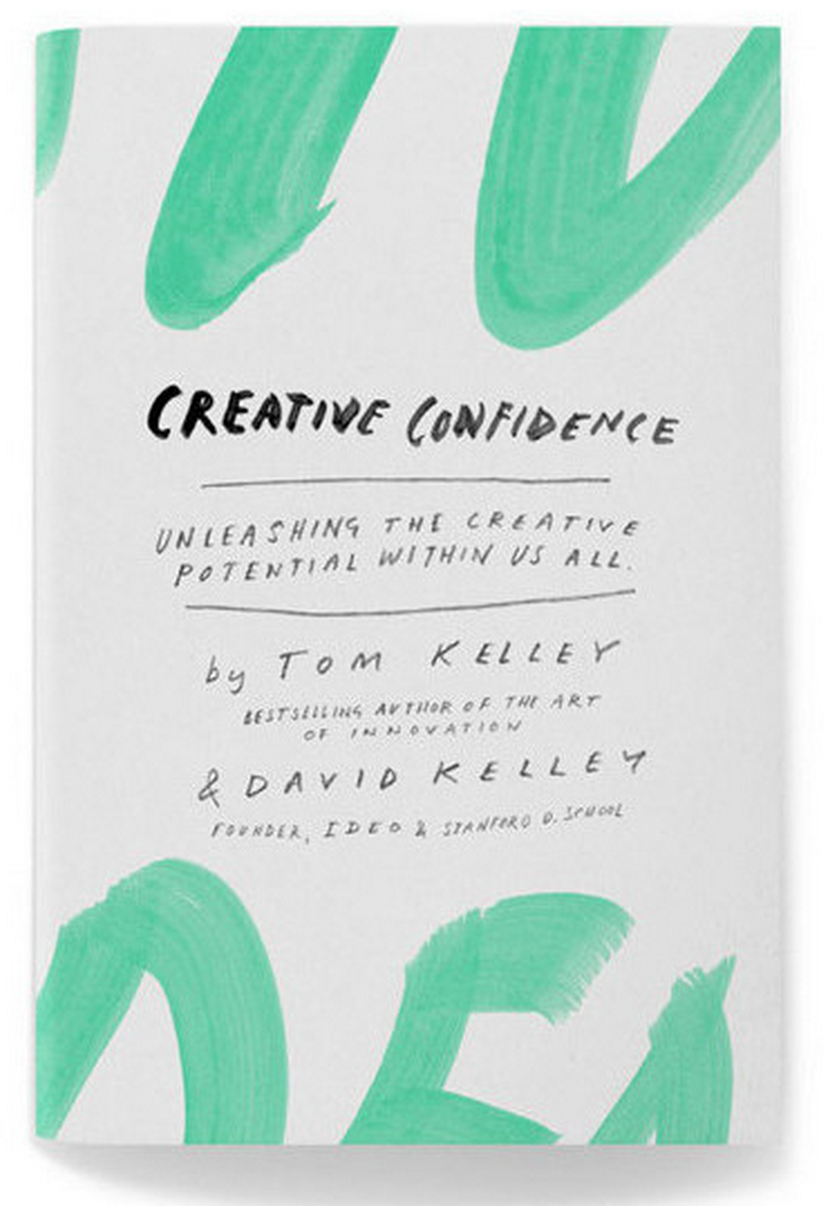
  • Tom & David Kelley’s Creative Confidence: Unleashing the Creative Potential Within Us All
  • Nick Morgan’s Power Cues: The Subtle Science of Leading Groups, Persuading Others, and Maximizing Your Personal Impact

While my 5-star rating rate was only 1 out of 3, that “one” – as cliche as it sounds – changed my life, or at least my perspective on life moving forward. The “one” (Creative Confidence) shone a spotlight on and forced me to look into a mirror of all my paralyzing insecurities. Face-to-face with these fears of failure, fears of judgment, and fears of change, I realized how much these insecurities had hampered my confidence and how with a little bit of courage, one step at a time, I could regain my power to do what I really want to do and simply be me: “What’s the greater risk? Letting go of what people think or letting go of how I feel, what I believe, and who I am?”
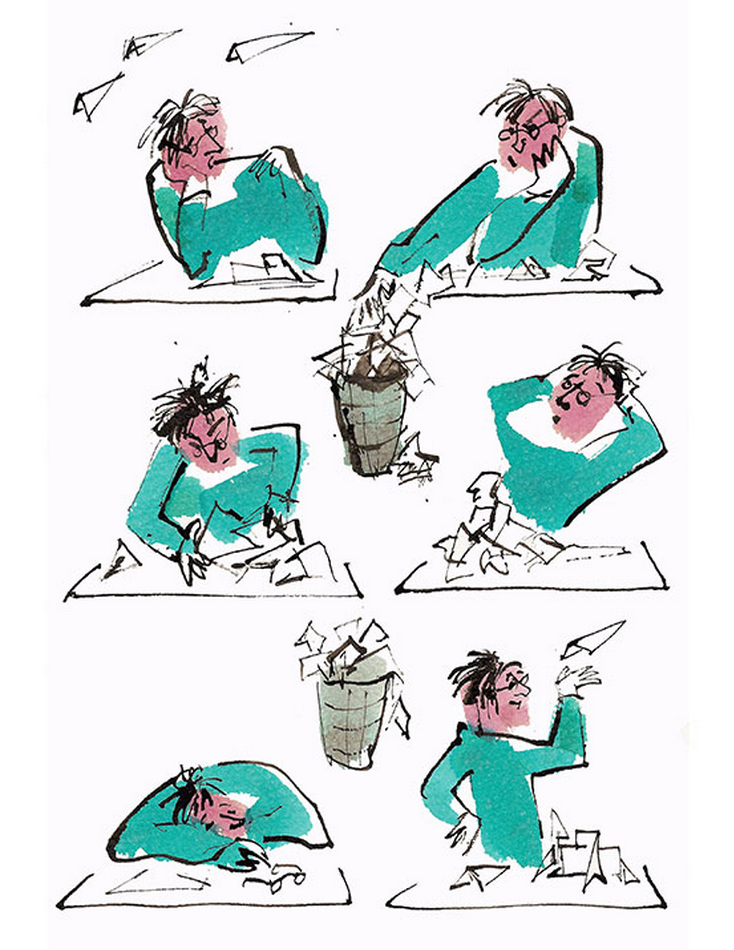
creative_confidence_art

Long story short, I officially resigned from what the Kelleys call a “looks good, feels bad” job. I am now taking my first step into a new adventure that I hope will lead me towards realizing my true calling.

I am scared. I am very scared. I still have many fears but I keep repeating the words that first inspired me to be courageous: “If you want to transform your life from mere duty to real passion, you have to start by realizing that your current situation is not the only option open to you. You can change how you live and how you work. Look at setbacks as the cost of trying new things. Don’t be afraid to try and fail. The worst thing you can do is to play it safe, stick with the familiarity of the status quo, and not try at all.”

So, what is your power of 10?


Practicing Creative Confidence

I hadn’t picked up a book for much too long. The leisurely read. The lay-on-the-beach kind of reading. The curl-up-before-bed kind of reading. The zone-in-on-the-commute kind of reading.

creative_confidence_art

I picked up Creative Confidence because, well, I was in a rut. The routine of waking up at 8 am, planting myself at my desk from 8:30 am-12 pm, grabbing a quick lunch to bring back to my desk, planting myself back in front of the computer until my lingering departure at 6 pm (sometimes 7 pm, sometimes 8 pm, sometimes 9 pm) had stripped me of any fresh-faced enthusiasm for what’s to come.

I enjoyed my job. And, I was good at it but it no longer gave me joy: the joy of being challenged, the joy of learning something new, the joy of contributing something tangibly “good”. I knew I needed a jolt of inspiration to push me out from behind my desk. An external push. I had become a bit too comfortable. I was strapped down by a fear of the unknown and a complacency for the known: a looks-good but feels-not-so-good (but good enough) job.

I needed more. I wanted more. But I was otherwise lost.

creative_confidence

Creative Confidence was exactly the dose of inspiration I needed to awaken me on how to “unleash the creative potential within us all”. With powerful anecdotes of those who were once (knowingly) lost but took charge of their creative potential through the lessons put forth by David Kelley (IDEO founder and Stanford d.school creator) and Tom Kelley (IDEO partner), I gained a better know-how to take the first step towards harnessing my own creative confidence.

So much of Creative Confidence resonated with me that I collected the words, literally carrying them in my pocket to remind me that latent creativity can be developed into creative confidence through everyday practice. One step at a time.

These quotes speak for themselves.

  • “What’s the greater risk? Letting go of what people think or letting go of how I feel, what I believe, and who I am?”
  • “In our experience, one of the scariest snakes in the room is the fear of failure, which manifests itself in such ways as fear of being judged, fear of getting started, fear of the unknown. And while much has been said about fear of failure, it still is the single biggest obstacle people face to creative success.”
  • “Fear of failure holds us back from learning all sorts of new skills, from taking on risks, and from tackling new challenges. Creative confidence asks that we overcome that fear. You know you are going to drop the ball, make mistakes, and go in a wrong direction or two. But you come to accept that it’s part of learning. And in doing so, you are able to remain confident that you are moving forward despite the setbacks.”
  • “György Konrád once said, ‘Courage is only the accumulation of small steps.'”
  • “When ideas are in short supply, it’s tempting to become possessive or territorial and limit your options. If you have only a few ideas in your idea bank, you’re more likely to settle on one of the few you have and defend it fiercely, even if it’s not optimal.”
  • “The best kinds of failures are quick, cheap, and early, leaving you plenty of time and resources to learn from the experiment and iterate your ideas.”
  • “Little changes can eventually add up to a big impact. Starting small gets you from a state of rest to a state of motion, and you’ve started to build momentum for the bigger challenges ahead.”
  • “Whether your resources are abundant or scarce, embracing experimentation can help fuel the fires of innovation. Experiments, by their very definition, are expected to have a higher rate of failure. But if you recast the traditional failure-is-not-an-option attitude as a series of small experiments, you can actually increase your chances of long-term success.”
  • “So don’t sit back and let circumstances determine your fate. Take action yourself, and influence the actions of others. As one of our favorite radio journalists, Scoop Nisker, used to say at the end of every one of his broadcasts, ‘If you don’t like the news … go out and make some of your own.'”
  • “When work is strictly a job, it may effectively pay the bills, but you’re living mostly for the weekend and your hobbies. Those who see work as a career focus on promotions and getting ahead, putting in long hours to achieve a more impressive title, a larger office, or a higher salary. In other words, you are focused on checking off achievements rather than pursuing deeper meaning. In contrast, for those who pursue a calling, their work is intrinsically rewarding in its own right— not just a means to an end.”
  • “What matters most about your career or position is not the value that others put on it. It’s how you view your job. It’s about your dream, your passion. Your calling.”
  • “Once you start to think about your life and career as just another creative challenge, many different possibilities may come to light.”
  • “While everyone has enormous potential for creativity, our experience suggests that successfully applying creativity in your work and life requires something more: the courage to leap. All that potential energy will just fade away if you don’t work up the nerve to unleash it, again and again. To make that leap from inspiration to action, small successes are key. Just as fear of the first step holds us back at the beginning of a project, the weight of the status quo hinders us from making significant career changes. You may have entertained the thought ‘I could have been a writer,’ or ‘I wish I worked in health care,’ and stopped there. However, if you make the first step small enough, it can nudge you toward your goal. But you need to take that first step.”
  • “If you want to transform your life from mere duty to real passion, you have to start by realizing that your current situation is not the only option open to you. You can change how you live and how you work. Look at setbacks as the cost of trying new things. Don’t be afraid to try and fail. The worst thing you can do is to play it safe, stick with the familiarity of the status quo, and not try at all.”
  • “If you are stuck in a ‘looks good, feels bad’ position or job, think about the overlap between your personal passions and the workplace options that might be available to you. Learn new skills. Start writing the new story of your working life. Keep searching for and moving toward a role that will feel as good as it looks. When you reach it, you may realize that you have found your calling.”
  • “Thoughts become words, and words become deeds. If you get the language right, it affects behavior.”